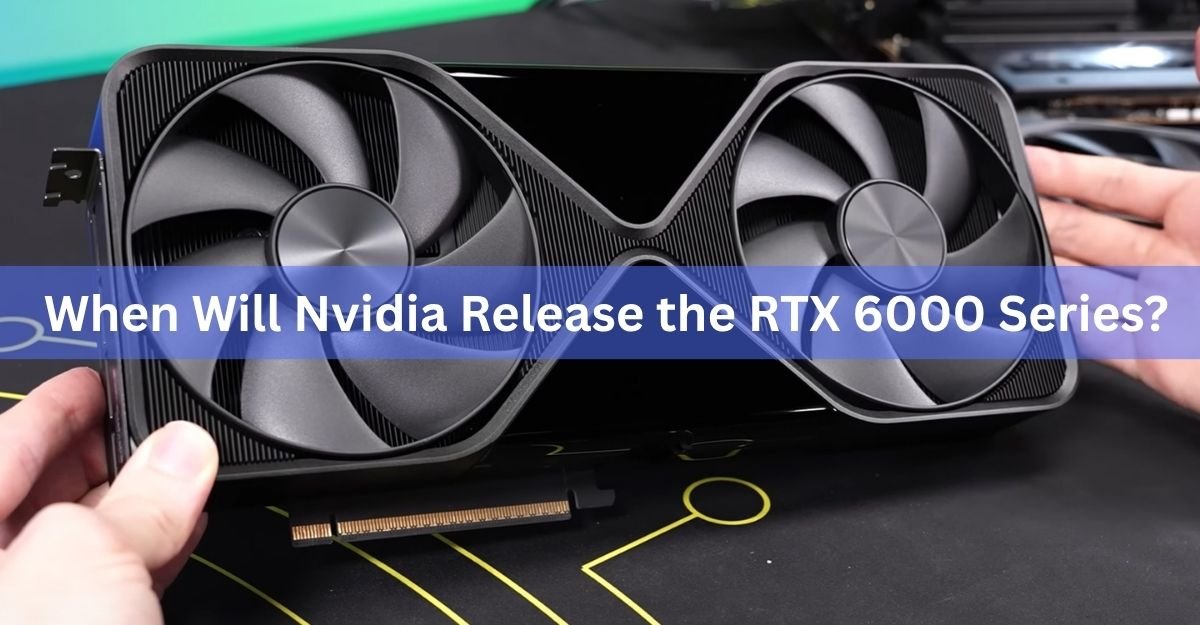
Nvidia has not set an official release date for its next generation of GeForce graphics cards. As of September 2026, the best public estimate points to 2028, not 2026 or 2027 as earlier chatter suggested. Nothing here is locked in, since Nvidia has not confirmed a name, a date, or even a full codename for the lineup.
Which “RTX 6000” are people actually asking about?
The name “RTX 6000” already belongs to a real, shipping product, and it is not a gaming card. The RTX 6000 Ada Generation and its successor, the RTX PRO 6000 Blackwell Workstation Edition, are professional workstation GPUs built for rendering, AI development, and design work. They cost thousands of dollars, and they have nothing to do with the next GeForce gaming generation.
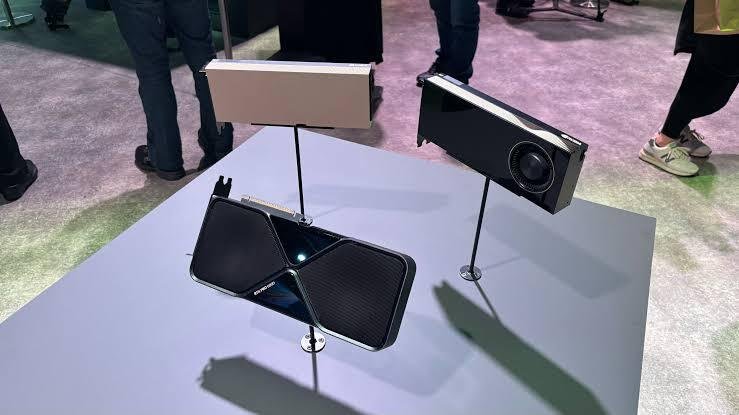
What most people mean when they search for “the 6000 series” is the successor to the GeForce RTX 50 series, the lineup that includes the RTX 5090 and RTX 5070. Nvidia’s naming pattern has run 10, 20, 30, 40, then 50, so the next gaming generation is expected to carry the name GeForce RTX 60 series once it launches. Plenty of casual coverage still calls it “RTX 6000” out of habit, but the two products sit in completely different price brackets and serve completely different buyers. This article is about the next gaming generation, whatever Nvidia ends up calling it.
When is the next GeForce generation actually expected?
The honest answer right now is 2028, based on the most recent reporting available as of mid-September 2026. That is a big shift from where things stood a year ago.
Nvidia’s GeForce RTX 50 series launched on January 30, 2025, built on the Blackwell architecture. Following the company’s usual roughly two-year rhythm, early industry chatter placed the next generation somewhere in 2026 or early 2027. Through 2026, that window kept sliding later. By January, the timeline had moved to the second half of 2027. By July, some tracking suggested Nvidia might skip a full new architecture in 2027 entirely and fill the gap with a refresh instead. By mid-September, multiple hardware outlets converged on a blunter conclusion: the new generation will not land in 2027 at all, and 2028 is now the more realistic target.
None of this comes from an Nvidia press release. Every point on that timeline traces back to unofficial channels: supply chain contacts, add-in board partners, and a small group of hardware leakers who have a strong track record on past Nvidia roadmaps but no formal confirmation from the company itself. Treat 2028 as the current best guess, not a locked date, because this same estimate has moved later several times over the past year and could move again.
If you are planning a build around a specific date, plan around what exists today. A GPU generation that keeps sliding a year at a time is not a safe bet to wait for.
Why does the timeline keep slipping?
The short version is money, not engineering trouble. Nvidia’s data center chips, the AI accelerators that power large language models and cloud training clusters, sell at gross margins a gaming card simply cannot touch. Every silicon wafer that a foundry produces on its most advanced process node can go toward one of those chips or toward a gaming GPU, and right now the AI chips win that competition almost every time.
This matters more than it used to because gaming and AI chips are converging on the same manufacturing lines. The next gaming architecture, informally called Rubin after the data center platform it shares a name with, is expected to use one of TSMC’s newest process nodes rather than an older node set aside mainly for consumer parts. That puts it in direct competition with the exact chips generating Nvidia’s biggest profits. Advanced memory is under similar pressure. High bandwidth memory used in AI accelerators and the GDDR memory used in gaming cards both draw on a limited pool of memory manufacturing capacity, and AI orders have been getting priority there too.
The practical result is that the RTX 50 series, which normally would have had roughly a two-year run before a replacement, now looks set to remain Nvidia’s current flagship lineup for close to three years. A GeForce RTX 50 “Super” refresh in 2027, a set of updated cards using the same underlying architecture, has come up repeatedly as a likely stopgap. Nvidia used the same playbook late in the RTX 40 series life span, adding Super variants of the RTX 4070 and RTX 4080 rather than rushing a full new generation.
What will power the next generation?
The architecture behind the next GeForce cards is expected to be a gaming-focused version of Rubin, the platform Nvidia has already announced for its data center business. The consumer GPU dies are informally referred to by the codename GR20x, distinct from the data center Rubin dies used in Nvidia’s AI hardware.
On the data center side, Nvidia has laid out a fairly detailed public roadmap. The company said Rubin-based products would reach partners in the second half of 2026, and at CES 2026 it said the platform had entered full production. Vera Rubin NVL72 systems, Nvidia’s rack-scale AI computers, began running at cloud partners including CoreWeave in mid-2026. None of that confirms anything about a gaming release date, but it does confirm the underlying architecture is real, already shipping in one form, and not just a rumor with no substance behind it.
For the gaming cards specifically, expectations point to a newer TSMC node than the one used for RTX 50, along with GDDR7 memory carried over and improved from the current generation. Specific core counts, memory sizes, and model names for individual cards remain unconfirmed, and any number circulating online right now should be read as a guess rather than a spec sheet.
How does this compare with Nvidia’s past launch cycles?
Nvidia’s gaming GPU generations have followed a fairly consistent two-year drumbeat for most of the past decade. The table below lays out that pattern and where the next generation currently sits against it.
| Generation | Architecture | Launch | Gap From Prior Generation |
|---|---|---|---|
| GTX 10 series | Pascal | 2016 | about 2 years |
| RTX 20 series | Turing | 2018 | about 2 years |
| RTX 30 series | Ampere | 2020 | about 2 years |
| RTX 40 series | Ada Lovelace | 2022 | about 2 years |
| RTX 50 series | Blackwell | January 2025 | about 2.3 years |
| Next generation | Rubin (expected) | 2028 (estimated) | about 3 years |
A three-year gap would be the longest stretch between full Nvidia gaming architectures since the mid-2010s. It is not unprecedented in the company’s history, but it has not happened during the RTX era, and it lines up with a similar delay reportedly hitting AMD’s next Radeon generation for close to the same reason: shared foundry capacity being pulled toward AI chips.
Pricing has moved in one direction across the recent generations too. The RTX 3090 launched at $1,499. The RTX 4090 launched at $1,599. The RTX 5090 launched at $1,999. A longer gap before the next generation gives Nvidia less competitive pressure to discount current stock, so expect RTX 50 series prices to stay firmer for longer than they would in a normal two-year cycle.
What should you do if you need a GPU right now?
Buy based on what exists today. The RTX 50 series is not a placeholder waiting to be replaced next year. It is the lineup Nvidia plans to sell, support, and likely refresh through at least 2027, and quite possibly into 2028.
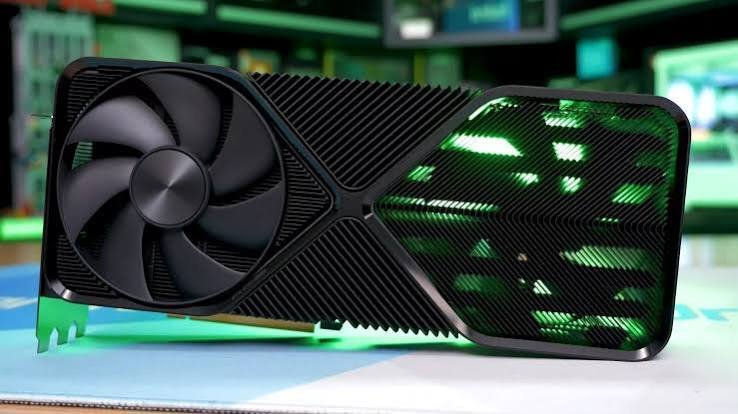
A few practical points follow from that:
- If your current GPU is struggling now, waiting for the next generation means waiting well over a year, and the estimate has already slipped multiple times.
- Watch for an RTX 50 Super refresh in 2027 as the more realistic near-term upgrade, rather than betting on a full new architecture arriving on schedule.
- Used and current-generation card prices are likely to stay firmer for longer than usual, since there is no imminent replacement pulling secondhand values down.
- If you work in rendering, AI development, or another professional workflow, the existing RTX PRO 6000 Blackwell lineup, not a future consumer card, is the relevant product to evaluate today.
Frequently asked questions
Is there already an RTX 6000 graphics card?
Yes. The RTX 6000 Ada Generation and the newer RTX PRO 6000 Blackwell are professional workstation GPUs, already on sale. They are not gaming cards and are unrelated to the next GeForce generation.
Will the next GeForce generation actually be called the RTX 6000 series?
Probably not. Nvidia’s naming pattern points to GeForce RTX 60 series, following 10, 20, 30, 40, and 50. Many people still search using “6000” out of habit.
What architecture will the next GeForce cards use?
The expected architecture is a gaming version of Rubin, the platform Nvidia has already confirmed for its data center chips. It is expected to use a newer TSMC manufacturing node than the current RTX 50 series.
Why is the release date not confirmed yet?
Nvidia has not made an official announcement. Every date in circulation comes from unofficial industry leaks and supply chain reporting, and that timeline has already shifted later several times over the past year.
Should I wait for the next generation before buying a GPU?
For most buyers, no. With the current estimate pointing to 2028, waiting means going well over a year without a working upgrade. The RTX 50 series, and any 2027 Super refresh, are the realistic near-term options.
Conclusion
Nvidia has not confirmed a release date, a name, or full specifications for its next GeForce generation. The current best estimate, based on unofficial industry reporting as of September 2026, points to 2028, a year later than expected only months ago. The RTX 6000 name already belongs to a professional workstation card, so the gaming successor to the RTX 50 series will likely be called the RTX 60 series when it eventually arrives. Until then, the RTX 50 lineup, and a possible 2027 Super refresh, are the realistic options.
Related Post:
Unsupported GPU Processing Mode in DaVinci Resolve: How to Fix It
Do You Need to Uninstall Drivers When Upgrading Your GPU?
What Are Good Temps for a CPU and GPU? Safe Ranges for Idle, Gaming, and Heavy Loads
Do I Need a GPU Support Bracket? A Plain Answer by Card Weight