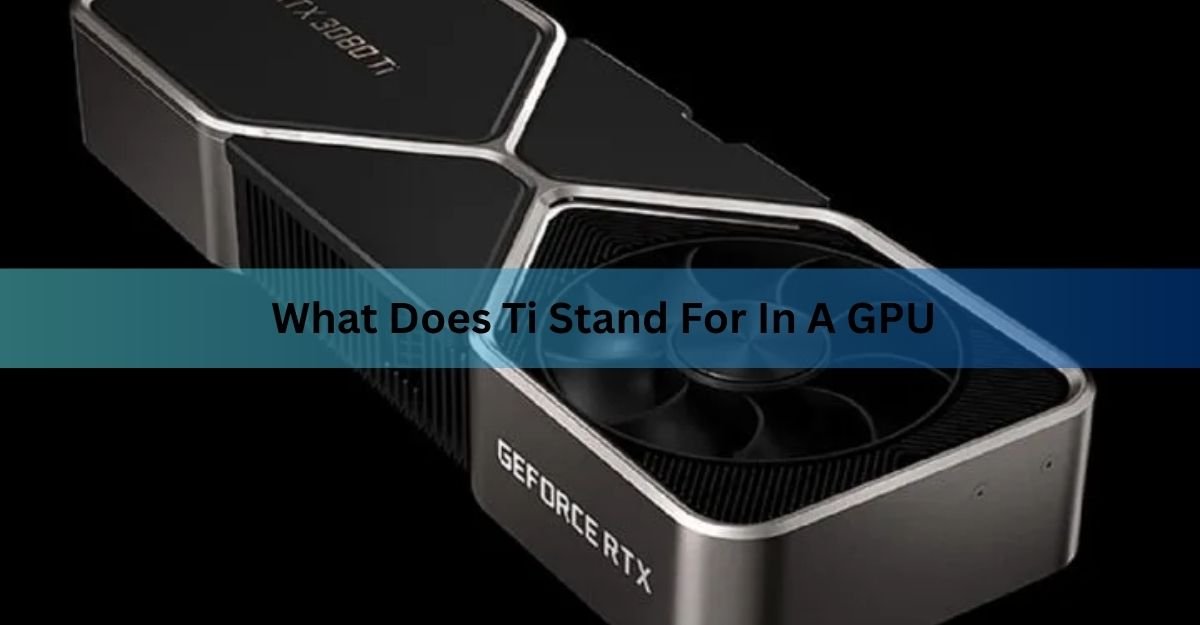
Ti stands for Titanium. On an Nvidia graphics card, it’s a badge that marks a faster, upgraded version of a standard model. So an RTX 4070 Ti is a stronger card than a plain RTX 4070, even though the two share the same family name and look almost identical on a store shelf.
The card isn’t made of titanium. Nvidia borrowed the name from the metal, which is known for being strong and tough, as a quick way to signal “this is the beefed-up one.” Below, we’ll cover what the Ti label actually adds, how much of a real difference it makes, and whether the extra cost is worth it.
What does Ti stand for in a GPU?
Ti is short for Titanium, and it only shows up on Nvidia GeForce cards. It’s not a technology or a feature you can switch on. It’s a name tag Nvidia sticks on a card to tell you it’s the higher-performance version within a series.
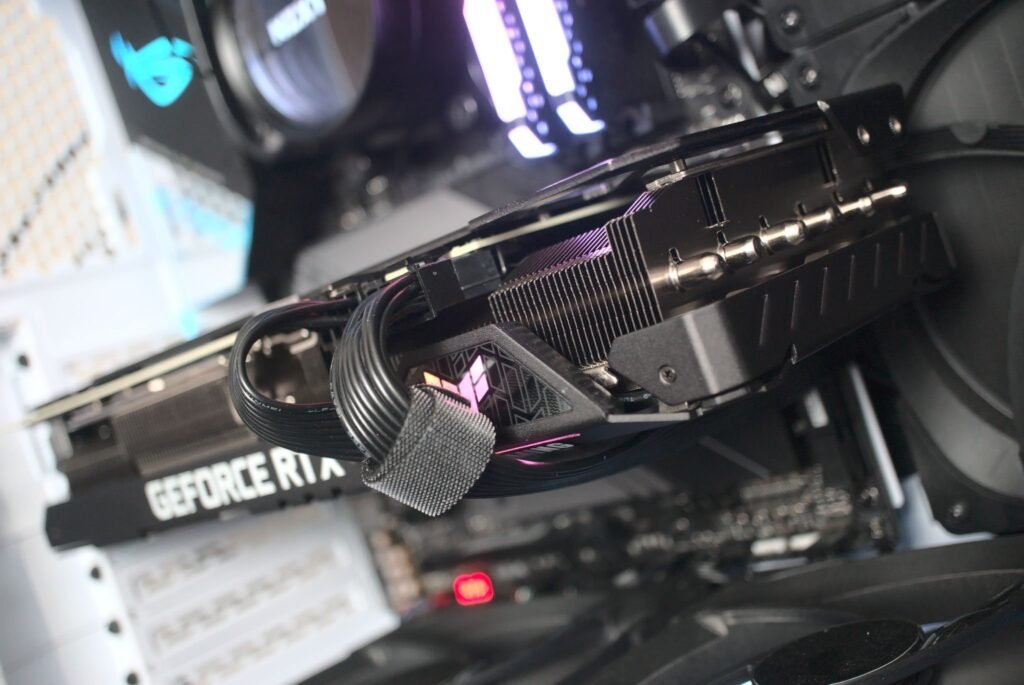
Think of it like trim levels on a car. The base model and the sport version might be the same car, but the sport one has a bigger engine. A Ti card is the sport version: same core design, more power under the hood.
Quick version: Ti = Titanium = the faster, upgraded model in that GPU line. A Ti card always outperforms its non-Ti twin.
What the Ti badge actually changes
When Nvidia adds Ti to a card, it usually turns up several dials at once. The gains vary from one generation to the next, but the pattern is steady.
Here’s what typically gets an upgrade:
- More CUDA cores. These are the tiny processors that do the heavy lifting for graphics. A card with more of them can crunch more work at the same time, which is the single biggest reason a Ti card runs faster.
- Higher clock speeds. The card runs at a faster pace, so each core gets more done per second.
- More or faster memory. Some Ti cards add extra VRAM (the memory that holds textures and frames) or a wider path to that memory, which helps at higher resolutions.
- A bit more power draw. All that extra performance needs more electricity, so Ti cards usually pull more watts and run a little warmer.
The result you feel is smoother gameplay, higher frame rates, and the headroom to play at 1440p or 4K instead of being stuck at 1080p. Creators see it too, with faster video exports and quicker 3D renders.
Ti vs non-Ti: a real comparison
Numbers make this clearer than any description. Take the RTX 4070 and the RTX 4070 Ti. Both are built on the same chip family and carry 12GB of memory, but the Ti gets a meaningful jump where it counts.
| Spec | RTX 4070 | RTX 4070 Ti |
|---|---|---|
| CUDA cores | 5,888 | 7,680 |
| Boost clock | 2.48 GHz | 2.61 GHz |
| Memory | 12GB GDDR6X | 12GB GDDR6X |
| Memory bus | 192-bit | 192-bit |
| Power draw (TDP) | 200W | 285W |
The 4070 Ti packs 7,680 CUDA cores against the plain 4070’s 5,888. That’s about 30% more, and it shows up as higher frame rates in demanding games, especially once you push past 1080p. The trade-off is power: the Ti draws 285W versus 200W, so it runs hotter and asks for a stronger power supply.
You can dig into the exact specs of any current card on Nvidia’s GeForce graphics card pages, which list core counts and memory for each model side by side.
Is a Ti graphics card worth the extra money?
Sometimes yes, sometimes no. A Ti card costs more than its non-Ti version, so the real question is whether the performance jump matches the price jump. Here’s a simple way to decide.
A Ti card is worth it if:
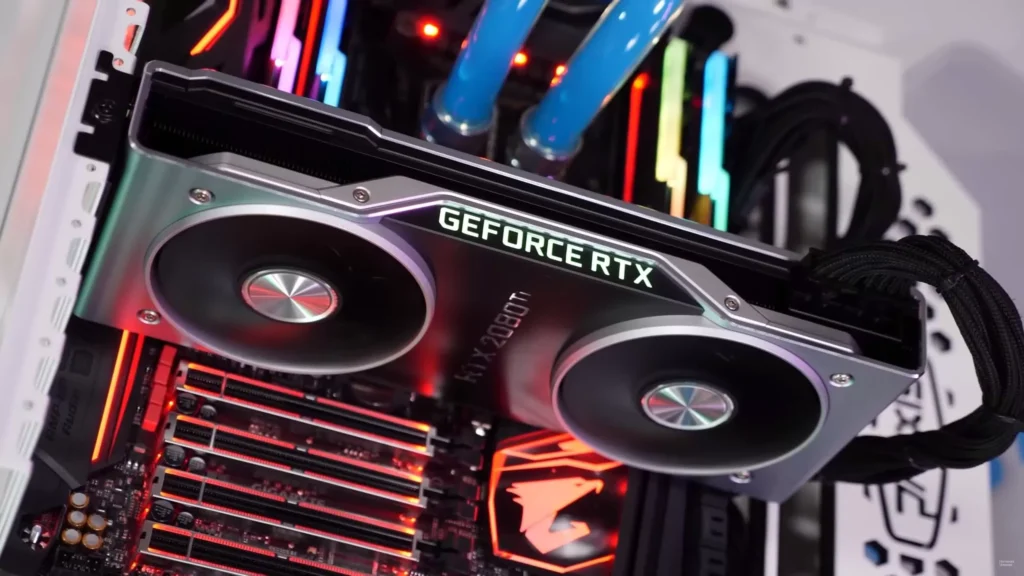
You game at 1440p or 4K, where the extra cores and memory actually get used.
You keep GPUs for several years and want more headroom for future games.
You do creative work like video editing or 3D rendering, which soaks up every core you can throw at it.
You can skip the Ti if:
You mostly play at 1080p, where a standard card already delivers high frame rates.
The price gap between the two is large but the performance gap is small (this happens, so always check current prices against benchmarks).
A different tier entirely, like a Super model or the next card up, gives you more performance for the money.
Rule of thumb: if the Ti costs 15% more but gives you 25% more performance, it’s a good deal. If it’s the other way round, look elsewhere first.
One handy quirk of Ti cards is that they often slot neatly between two tiers. A 3060 Ti, for example, sits closer to a 3070 in raw power while usually costing less, which can make it the value pick in its generation.
How Ti compares to Super, XT, and XTX
Ti isn’t the only suffix you’ll run into, and it helps to know the neighbours.
Super is Nvidia’s other “upgraded” tag. Like Ti, it means a stronger version of a base card. In recent lineups Super and Ti both appear, with Ti usually sitting at the higher end. Some cards even stack both, like the RTX 4070 Ti Super.
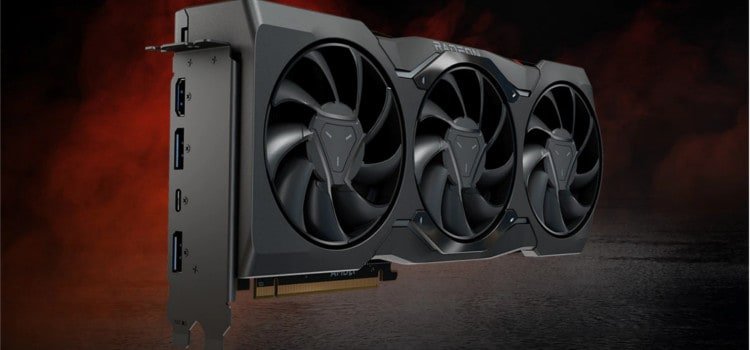
XT and XTX belong to AMD, not Nvidia. AMD doesn’t use Ti at all. On a Radeon card, XT marks the faster version, and XTX marks AMD’s top-end variant. They serve the same purpose as Ti, just under a different brand.
So if you see Ti or Super, you’re looking at Nvidia. If you see XT or XTX, you’re looking at AMD. All of them are shorthand for “this is the punchier model in the range.”
A short history of the Ti badge
Nvidia has used Ti for a long time, going back through the GTX era with cards like the GTX 560 Ti, the GTX 980 Ti, and the much-loved GTX 1080 Ti. In each case, the Ti was the top or near-top card of its family.
One thing worth knowing: a Ti doesn’t always arrive after the base card. The RTX 3060 Ti launched first, on December 2, 2020, with 4,864 CUDA cores. The standard RTX 3060 came the following month with fewer cores (3,584) but more VRAM. So the badge tells you about performance tier, not release order.
Frequently asked questions
Does Ti mean the card is made of titanium?
No. The name is borrowed from the metal, which is known for strength, but there’s no titanium in the card. It’s simply Nvidia’s label for the faster, upgraded model in a series.
Is a Ti GPU always better than the non-Ti version?
Yes, in raw performance. A Ti card has more cores, higher clocks, and often more memory than its non-Ti twin, so it renders games and creative work faster. It also costs more and uses more power.
Do AMD cards have Ti versions?
No. Ti is an Nvidia-only label. AMD uses XT and XTX on its Radeon cards to mark the faster and top-end versions, which do the same job as Ti under a different brand.
What’s the difference between Ti and Super?
Both are Nvidia tags for an upgraded card. In recent lineups they appear together, with Ti usually at the higher end. A few cards combine both, like the RTX 4070 Ti Super, which sits above a plain Ti.
Should I buy a Ti card for 1080p gaming?
Usually not. A standard (non-Ti) card already runs 1080p games at high frame rates. The extra power in a Ti card pays off most at 1440p, 4K, or in demanding creative work.
Conclusion
Ti means Titanium, and it marks the faster, upgraded version of an Nvidia graphics card, usually with more CUDA cores, higher clocks, and stronger performance than its non-Ti twin. Whether to buy one comes down to value: if the Ti’s extra performance outpaces its extra cost and you game above 1080p or do creative work, it’s a smart pick. If you play at 1080p or the price gap is steep, a standard card will serve you just as well.
Related Post:
Why Is My GPU Usage So High? (And When It Actually Matters)
Should I Remove the GPU When Moving My PC
GPU Overheated? What It Means and How to Fix It
How to Check If Your GPU Damaged Your Motherboard
What Does Overclocking a GPU Do? Plain Explanation